一吻定情
China’s first supernode for 2t-parameter models enters service in Ulanqab_我的网站

一 | Dhaka, Oct 9 (UNI) Teesta is one of the 54 rivers that enter Bangladesh from India. After originating from Solamo Lake in India, it flows over Sikkim and West Bengal and enters Bangladesh through Rangpur region.
Later it joins the Brahmaputra river near Chilmari in Kurigram district. For many years there has been a demand for a Teesta agreement on the sharing of Teesta water. But the agreement is stuck due to India's delay and various excuses. Because of this, the people of the northern part of Rangpur Bangladesh are now dreaming about the Teesta Master Plan.
The Teesta Agreement was to be signed during the then Prime Minister of India Manmohan Singh's visit to Dhaka in 2011. But it stalled in the face of opposition from West Bengal Chief Minister Mamata Banerjee. Then in 2015 Indian Prime Minister Narendra Modi visited Bangladesh with Mamata Banerjee. There he assured that a compromise would be reached on Teesta water sharing. But the Teesta problem has not been solved.
During the last Bangladesh Prime Minister Sheikh Hasina's visit to India, there was a possibility of reaching a settlement on Teesta water distribution, but it did not happen.
In addition to the construction of various infrastructure related to Teesta coast management, flood control dams and various types of infrastructure will be built to eliminate water shortage during summer. Since Bangladesh has a long-standing dispute with India over Teesta water sharing, arrangements will be made to retain water during the dry season. Among the issues that have dominated the project so far, three are important—dredging the riverbed, revetment or embankment repair and embankment, and land reclamation. Apart from this, there are also plans to repair flood dams.
If this project named 'Teesta a River Comprehensive Management and Restoration' is implemented, a 220 km high guide dam, river drive, hotel-motel-restaurant, modern city and tourist center will be developed along both the right and left banks of the Teesta river. Along with that, 150 MW solar power plant, industrial plant, EPZ will be built.
Apart from this, several lakh hectares of agricultural land will be saved and afforested. Under this project, the main stream of Teesta will be two kilometers, which will maintain navigability throughout the year. It will be connected by several canals, which will benefit crores of people of Teestapar. It is said that the two banks of the Teesta will be modernized on the model of China's Huang Ho River and Suqian City through the master plan. There will be Marine Drive on both sides of the embankment. Modern irrigation projects and agricultural farms with machinery will be built. At the same time satellite cities will be built on both banks of the river.
The two banks of the Teesta will be developed on the model of Suqian City in East China's Jiangsu Province. For this, approximately 9 thousand crore taka can be spent. The project is named Teesta River Comprehensive Management and Restoration'. Since then, days go by, months go by, years go by and years come. However, the much-desired great plan has not started.
Chinese Ambassador Li Jiming visited the Teesta Barrage on Sunday, October 9.
At this time, he listened to the hopes and aspirations of the people of the area. A large number of local people, civil society and administration people were present.
It is noted that, Rangpur is the poorest division of Bangladesh. And five of the country's poorest and most impoverished districts are located across the ravaged Teesta. Pagla river famous Teesta Lalmonirhat, Nilphamari, Rangpur, Kurigram and Gaibandha districts is the name of the misery of millions of people. The flow of the 234-year-old Teesta is causing floods and droughts every year in these five districts. People's sighs are getting heavier because of this, the life cycles of both sides are constantly changing.
UNI BAV SHK1835。
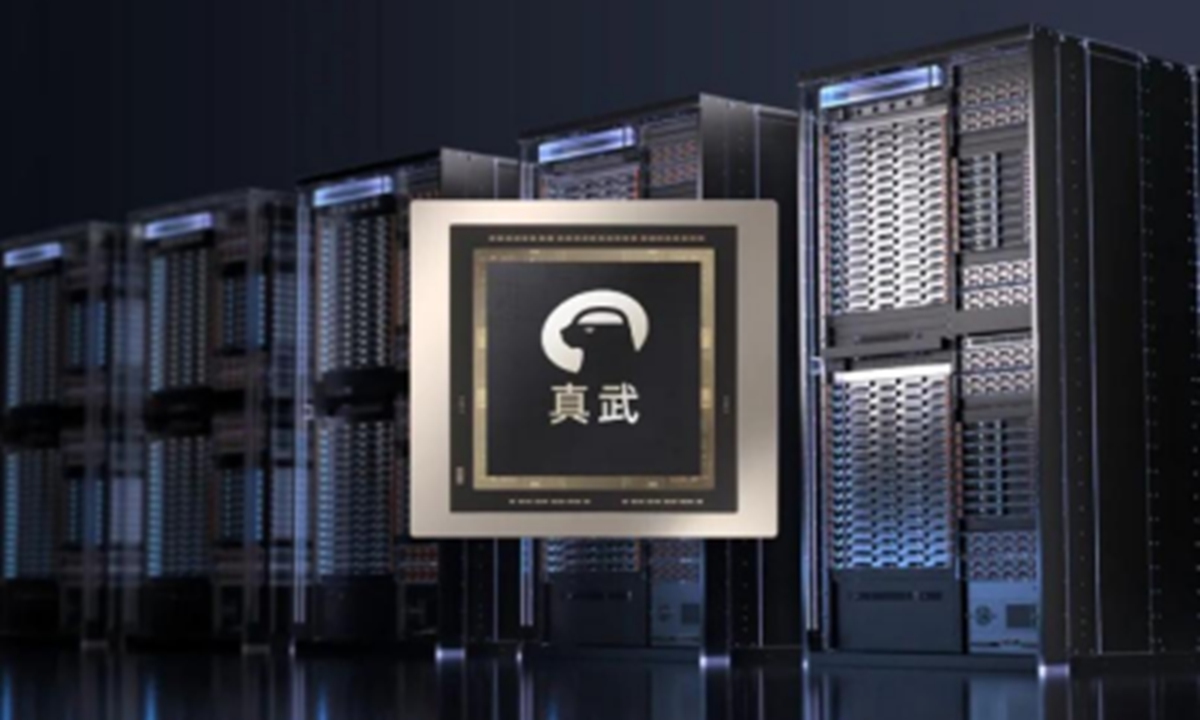
The instance is designed to handle inference for mixture-of-experts models with up to 10 trillion parameters, the company said in a statement sent to the Global Times on Wednesday.
This marks the first supernode-form computing architecture in China to successfully run large language models exceeding 2 trillion parameters, according to the company.
Industry expert Tian Feng told the Global Times that the commercial rollout of supernode infrastructure could significantly reduce training cycles, lower costs, and speed up iteration for AI developers requiring massive computational resources.
The company said the new instance has already been used to power commercial services for large language models such as KimiK3 and Qwen3.8Max.
The Lingjun Zhenwu M890 supernode instance supports FP8/FP4 low-precision computing. Through the ICNSwitch 1.0 chip, its scale-up interconnect scale has been expanded from 16 cards to 64 cards, with inter-card interconnect bandwidth boosted to 800 GB/s. Enterprises can provision 64-card, high-speed-interconnect computing units through the cloud without building their own data centers, according to the company.
In training scenarios such as autonomous driving and embodied intelligence, the instance delivers three times the training performance compared with the previous-generation Zhenwu 810E, the company said.
Ulanqab, where the supernode instance debuted, is one of Alibaba Cloud's five super data centers. The facility sources approximately 90 percent of its electricity from green energy, providing a low-carbon operating environment for high-density computing power.
Leveraging its climate, energy and network advantages, Ulanqab has transformed from "China's potato hometown" into the "token factory" - a term increasingly used in the AI industry to describe infrastructure dedicated to producing the digital building blocks generated by large language models.
By the end of 2025, the city had attracted 84 data center projects, including 81 intelligent computing centers, with total investment exceeding 500 billion yuan ($74.1 billion) and operational computing power reaching approximately 172,000 petaflops, ranking it firmly in the nation's top tier, according to domestic media reports.
On August 6, China's largest AI computing industrial park was completed and put into operation in Ulanqab. The project highlights a broader race in China to build massive AI data centers capable of supporting the next generation of AI models while addressing soaring electricity demand, according to Chinese experts.
In recent years, Inner Mongolia has been rapidly positioning itself as a global-scale AI computing center cluster. Major technology companies, including Huawei, Tencent, ByteDance and Alibaba; telecom operators China Mobile, China Telecom and China Unicom; as well as cyberspace infrastructure service provider VNET, have established computing facilities in the region.
As the AI industry gradually transitions from the training era to the inference era and large model parameters continue to expand, supernodes have become a central battleground for AI infrastructure.
Chinese vendors are accelerating deployments in this space. Huawei has commercially deployed more than 750 sets of its Ascend 384 supernodes across industries including internet, telecom operators, finance, education, healthcare, transportation and manufacturing. It is also the only domestic supernode to have trained state-of-the-art (SOTA) models.
Baidu AI Cloud has also launched its Tianchi 256-card supernode based on Kunlun chips, with support for major models including Wenxin, DeepSeek, GLM, and MiniMax.
Meanwhile, supercomputer manufacturer Sugon has unveiled China's first fully domestic 100,000-card AI supercluster Sugon 8000 (Dengfeng), integrating supercomputing and AI computing on a unified architecture. It has now been connected to the national supercomputing internet to provide computing services to government, research, and enterprise clients nationwide.
Tian, former dean of SenseTime's Intelligence Industry Research Institute, told the Global Times that the flurry of domestic supernode launches reflects a broader inflection point as China's AI sector pivots from training capacity toward efficient, large-scale inference.
The expert further said that the commercial viability of these systems - evidenced by Huawei's extensive deployed base, Baidu's rapid model adaptation and Sugon's integration into the national computing network - suggests domestic vendors are moving beyond proof-of-concept to genuine production-grade infrastructure, a prerequisite for sustaining the next wave of trillion-parameter model proliferation, Tian noted.
The move also underscores China's push for self-reliance in AI infrastructure as US chip export restrictions continue to tighten, Tian said, noting that, in the supernode domain, Chinese companies are shifting from imported graphics processing units toward homegrown interconnect chips and domestic compute clusters, a transition that could reshape value allocation across the AI industry chain.
。
Current article:http://tctb2ag.shaihanhuangwoshang.cyou/news/20260826_9212311.html
Published on:15:30:46


